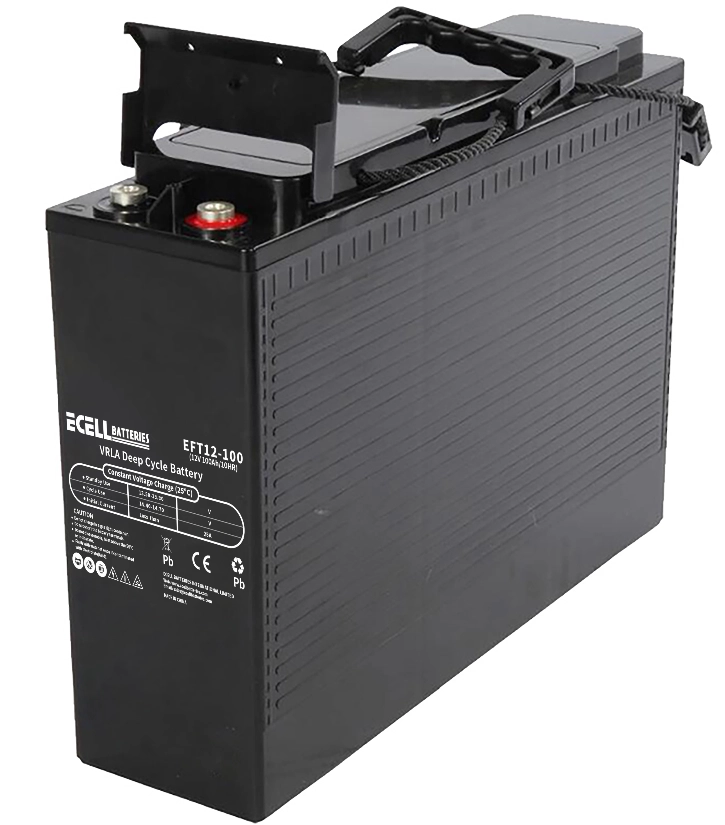







How to Build a High-Efficiency Solar Setup with 12.8V 100Ah LiFePO₄ Batteries: A Complete Guide for RVs and Off-Grid Living
Release time: 2026-01-17
Going off-grid used to mean compromising on comfort, but things have changed. Whether you’re retrofitting an old camper or building a tiny cabin from scratch, the heart of your power system is your battery bank. If you want reliability without the back-breaking weight of traditional options, the ECELL BATTERIES | ELIS 12100 12.8V 100Ah Lithium Battery has become the gold standard for modern explorers. In this guide, we’re going to break down how to integrate these powerhouses into a high-efficiency solar setup that keeps your lights on and your beer cold, no matter how far off the map you go.
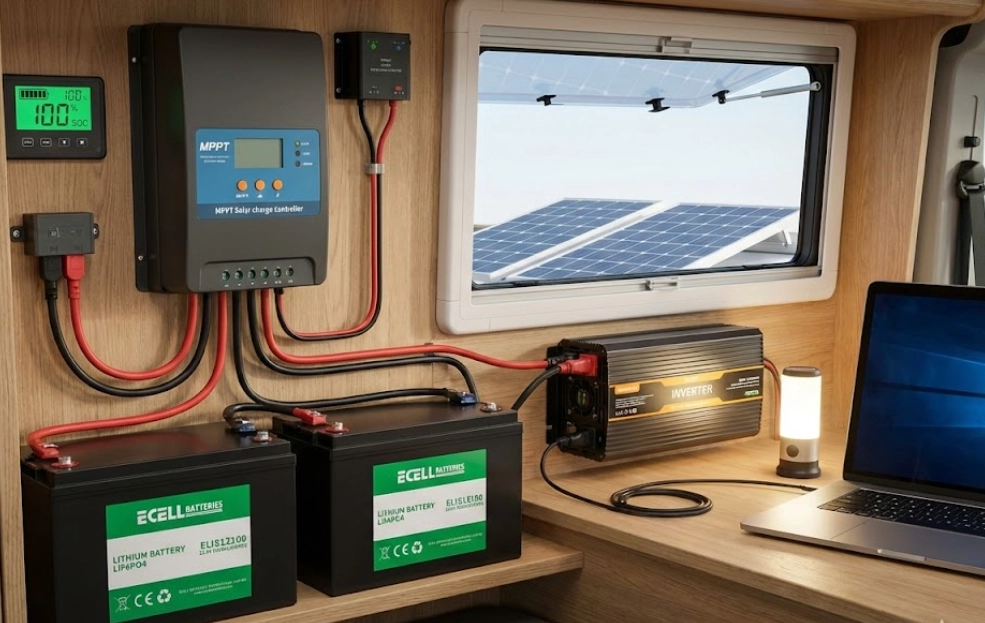
Why the 12.8V 100Ah LiFePO₄ Battery is the “Sweet Spot”
When planning a solar build, you’ll hear a lot of talk about different voltages and capacities. So, why is everyone obsessed with the 12.8V 100Ah LiFePO₄ Battery? It comes down to versatility and efficiency. A single 100 Ah unit provides roughly 1.28 kWh of energy—enough to run a high-efficiency fridge, charge your laptops, and power LED lighting for a full day. Unlike old-school lead-acid batteries that you can only drain halfway, this lithium battery allows you to use nearly 100% of its rated capacity without damaging the cells. This means you’re getting twice the usable energy in a package that weighs about 60% less. For RV owners, saving 40-80 pounds of “tongue weight” is a massive win for fuel economy and handling.
Designing Your Solar Array for Peak Charging
A battery is only as good as its ability to recharge. To keep your 12.8V 100Ah LiFePO₄ battery healthy, you need a solar array that can push enough current back into it during those precious daylight hours. For a single 100 Ah unit, I generally recommend between 200 W and 300 W of solar panels.
- MPPT over PWM: Always use an MPPT (Maximum Power Point Tracking) charge controller. It’s about 30% more efficient than cheaper PWM controllers, ensuring you harvest every drop of sun.
- Voltage Matching: Ensure your charge controller has a specific “LiFePO₄” or “Lithium” profile. These batteries require a steady bulk charge of around 14.4V-14.6V to reach 100% capacity.
- Wire Gauge Matters: Don’t bottleneck your efficiency with thin wires. Use 10 AWG or thicker from your panels to the controller to minimize voltage drop.
Scaling Your System: Paralleling vs. Series
One of the best things about the ECELL BATTERIES | ELIS 12100 12.8V 100Ah Lithium Battery is its modularity. If your power needs grow, you don’t have to start over. Most high-quality LiFePO₄ units allow you to connect multiple batteries to expand your “fuel tank.”
- Parallel Connection (12V High Capacity): By connecting the positive to positive and negative to negative, you keep the voltage at 12.8V but double your amp-hours to 200Ah. This is perfect for standard RV systems.
- Series Connection (Higher Voltage): If you’re running heavy-duty appliances like an air conditioner or a microwave, you might want to connect two batteries in series to create a 24V system. This reduces the current (amps) flowing through your wires, which reduces heat and improves overall system efficiency. Just remember: when mixing batteries, always use the same brand, model, and age to ensure they discharge and charge at the same rate.
Maximizing Longevity with Smart Power Management
While a lithium battery is incredibly durable, a little bit of “battery hygiene” goes a long way toward making it last a decade or more. The biggest enemies of LiFePO₄ are extreme temperatures. Most modern 12.8V 100Ah LiFePO₄ battery models come with a built-in Battery Management System (BMS) that acts as a brain, protecting against overcharging and short circuits. However, if you’re camping in the dead of winter, look for batteries with “Low-Temperature Charge Protection.” Charging a lithium cell when the internal temperature is below freezing can cause permanent damage. If you’re building for a four-season RV, mount your batteries inside the insulated living space rather than on the exterior frame to keep them in their “happy” temperature range.
Final Thoughts on Your Off-Grid Journey
Building a high-efficiency solar setup doesn’t have to be an engineering nightmare. By centering your build around the 12.8V 100Ah LiFePO₄ Battery, you’re choosing a path of low maintenance, high safety, and incredible weight savings. It’s an investment that pays for itself through thousands of cycles, giving you the freedom to stay off-grid longer without the anxiety of a dying power system. Start small, monitor your usage, and don’t be afraid to add another 100 Ah unit down the road if you decide that an induction cooktop or an electric kettle is a “must-have” for your adventures.